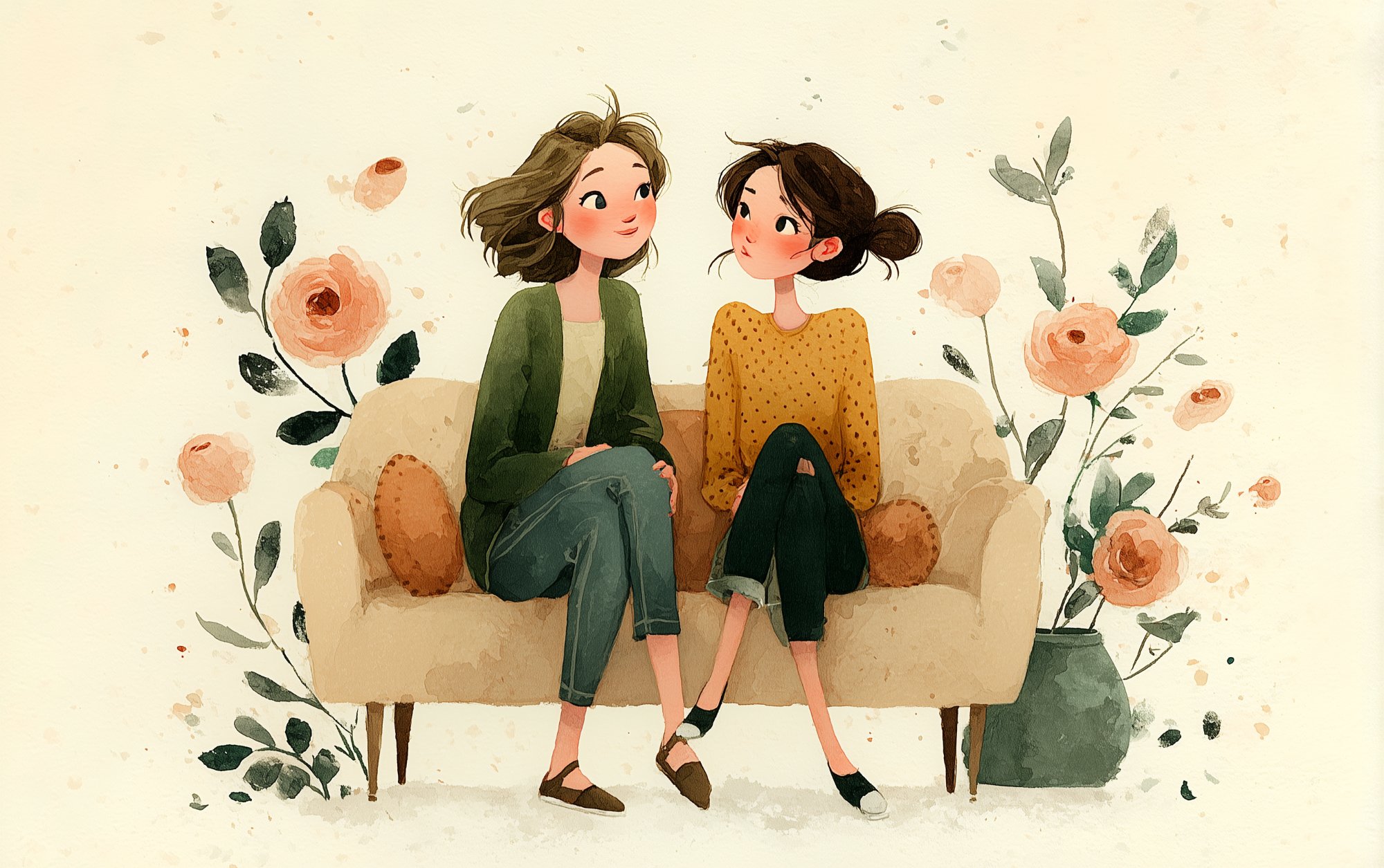
Your friend just told you she has breast cancer. You went home, you cried, and now you're searching the internet for what to do next. I know you are because you're reading this.
First: the fact that you're here means you're already a good friend. The friends who disappear after a diagnosis aren't searching for guides on how to help. You are. That tells me everything I need to know about you.
I was diagnosed with HER2 breast cancer in October 2024. I'm 32, a mother of three, and I was living in a new country after fleeing a war zone when the diagnosis came. In the months since, I've learned exactly what kind of support helps a cancer patient — and what kind, despite best intentions, can make things harder.
This is what I wish every friend of a cancer patient knew.
The First Week: What She Actually Needs
The first week after diagnosis is chaos. She's processing the worst news of her life while also being thrown into a whirlwind of medical appointments, test results, second opinions, and treatment decisions. She's terrified. She might be calm on the surface, but inside, her world is on fire.
During this week, she does not need advice. She does not need research. She does not need you to tell her about your cousin who had the same thing. What she needs is for the normal parts of her life to keep functioning while she processes something enormous.
Show up with food. Not "let me know if you need anything" — actual food, at her door, with no expectation that she'll eat it with you or even thank you properly. Send a text that says: "I left soup on your porch. No need to respond. Love you." That's it. That's everything.
During Treatment: The Long Middle
Here's what people don't understand about cancer treatment: it's not a sprint. It's a marathon that lasts months, sometimes years. The first two weeks, everyone shows up. By month three, the calls slow down. By month six, many people have moved on with their lives. The patient hasn't. She's still sitting in that chair, still nauseous, still exhausted, still scared.
The best friends are the ones who show up on month four. On month seven. On a random Tuesday when she has nothing to report except that she's tired and her bones ache and she cried in the shower again.
Practical things that help during treatment:
Drive her to appointments. Treatment days are draining. Driving afterward can be unsafe. If you can commit to even one appointment a month, do it. Sit in the waiting room. Bring a book. Just be there.
Handle one recurring task. Maybe it's picking her kids up from school every Thursday. Maybe it's grocery shopping every other week. Maybe it's cleaning her bathroom once a month. Pick one thing and own it. Consistency matters more than grand gestures.
Send texts that don't require responses. "Thinking of you today." "Saw a rose bush blooming and it reminded me of you." "Just wanted you to know you're loved." These tiny messages are lifelines. They don't ask anything of her. They just land softly in her phone and remind her she's not forgotten.
Invite her to normal things. Don't stop inviting her to coffee, to dinners, to movie nights. She might say no. She might say no a lot. But keep asking. The moment she feels excluded from normal life is the moment cancer wins something it shouldn't.
What Not to Do (Even Though You Mean Well)
Don't make it about you.
You're scared. You're sad. You might even be grieving a version of your friendship that feels like it's changing. Those feelings are valid, and you should process them — but not with her. Find your own support system for your feelings about her cancer. She cannot carry the weight of your grief on top of her own.
Don't compare.
Every cancer is different. Every treatment is different. Every patient is different. When you say "my aunt had the same thing," what your friend hears is either false hope or a death sentence, depending on how the story ends. Neither helps.
Don't push positivity.
There will be days she wants to be angry. Days she wants to be scared. Days she wants to say "this isn't fair" without someone immediately trying to silver-line it. Let her feel what she feels. Sitting in darkness with someone is more powerful than trying to drag them into light they're not ready for.
Don't treat her differently.
She is still the same person she was before diagnosis. She still has opinions about bad TV shows. She still laughs at the same jokes. She still wants to complain about mundane things. Don't turn every conversation into a cancer conversation. Sometimes the most supportive thing you can do is treat her exactly the way you always have.
Gifts That Actually Matter
If you want to give your friend something tangible, choose comfort over awareness. I've written extensively about this — pink ribbon products are among the least helpful gifts for active patients. We don't need reminders of our diagnosis. We need softness, warmth, and gentle encouragement.
The gifts I've appreciated most: a soft blanket for chemo days, a beautiful mug for my morning tea ritual, a journal for the thoughts that keep me up at 3 AM, and handwritten letters from people who love me. The letters are the ones I keep going back to.
 A Gift That Says It All
Every product in Laila's Garden is designed by a breast cancer patient for breast cancer patients. Soft blankets, hopeful mugs, and encouraging wall art — gifts that carry warmth, not reminders.
Find the perfect gift →The Emotional Rollercoaster You Should Expect
Your friend will have good days and terrible days, sometimes within the same hour. She might laugh at lunch and cry in the parking lot. She might cancel plans at the last minute because a wave of nausea or exhaustion hit without warning. She might snap at you for something small and then feel terrible about it.
None of this is about you. All of it is about the impossible thing her body and mind are processing.
The best thing you can do is be steady. Don't match her highs and lows with your own emotional swings. Be the calm in her storm. Be the person who is always the same — always kind, always present, always patient. That consistency becomes an anchor she can hold onto when everything else feels like it's moving.
After Treatment: Don't Stop
When treatment ends, people often assume everything goes back to normal. It doesn't. Survivorship comes with its own set of challenges: fear of recurrence, physical recovery, emotional processing, identity shifts, and a strange kind of loneliness that comes from being expected to feel grateful and healed when you still feel broken in places no one can see.
Check in after treatment ends. Keep checking in. Ask her how she's doing — not just physically, but emotionally. Give her space to say "I'm struggling" without rushing to fix it. The after is often harder than the during, because during treatment you at least feel like you're actively doing something. After, you're just waiting. And hoping. And trying to rebuild a life that cancer rearranged.
Take Care of Yourself Too
Supporting a friend through cancer is emotionally demanding. You're allowed to be tired. You're allowed to feel scared. You're allowed to take a day off from being strong.
Find your own support — a therapist, a support group for friends and family of cancer patients, or another friend you trust. You cannot pour from an empty cup, and your friend needs you to be whole enough to show up for the long haul.
What Your Friendship Means
I want to end with this: your friend might never fully express how much your support means to her. During treatment, there aren't enough words or energy to properly thank the people who hold you up. But she feels it. Every meal you bring, every text you send, every time you show up and simply sit beside her — she feels it in her bones.
Cancer reveals who people really are. And you, reading this guide at whatever hour, trying to figure out how to be a better friend to someone who's scared — you're the kind of person who makes survival possible.
Not the medicine. Not the doctors. You.
The people who stay are the garden that keeps a patient alive.
— Laila